Five Nights At Freddy
Under Evaluation
Journal Description
Horror games have changed a lot over the past decade. Jump scares used to be cheap ambushes — loud noise, ugly face, credit roll. But then a little indie title about haunted animatronics flipped the entire genre on its head. It proved that true terror doesn't come from gore or chase sequences. It comes from what you can't see, what you can only hear, and what happens when you run out of power.
If you've never played a game like this before, the idea of sitting still in an office while robot animals try to stuff you into a suit probably sounds ridiculous. But that's exactly the magic of it. Let's walk through how to actually experience — not just survive — one of the most clever horror designs in gaming.
The Premise: You're Not the Hero
Let's set the scene. You are a night security guard at a family pizzeria. Your tools: two doors, a pair of lights, and a limited battery that drains the moment you use anything. Your job: sit in your chair from midnight to 6 AM and don't die. That's it. No weapons. No running. No hiding places except the very room you're already in.
The brilliance here is vulnerability. Most games hand you a gun and let you fight back. This one hands you a clipboard and says good luck. You are not the predator. You are prey with a door button.
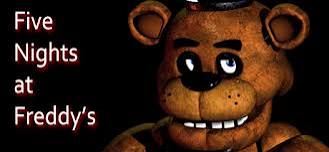
When you first boot up Fnaf, the office feels almost cozy. Papers scattered on the desk. A fan humming. A tablet showing security cameras. Then you check the left hallway and see nothing. Check the right. Nothing. Look at the cameras and spot Bonnie standing perfectly still in the dining area. Your stomach drops a little. You close the camera. He's moved closer. That's when you realize: you're not alone, and they're not just decorations.
Gameplay Loop: Tension by Design
The core loop is deceptively simple. You cycle through cameras to track animatronics' positions. When one gets too close, you close the adjacent door and check the other side. If you miss a movement, they appear in your doorway. If you're too slow, you get jumpscared. If you waste too much power watching cameras or keeping doors shut, the lights go out — and that's a death sentence.
What makes this work so well is resource management as horror. Every second of camera use drains battery. Every door closure drains battery. You have to balance awareness with conservation. Do you close the door because you heard footsteps, or do you risk checking the camera to save power? That split-second decision — should I check or should I act — is where the real horror lives.
Sound plays a massive role. Put on headphones. Seriously. You'll hear footsteps approaching from specific directions. You'll hear the kitchen ambience that means someone is moving through the back. You'll hear Bonnie's heavy stomps or Chica's metallic clatter. The game trains you to listen before you look, and that makes every creak and hum feel personal.
Another trick the game pulls is the breathing room between nights. Night 1 is almost gentle — slow movement, easy tracking. It lulls you into thinking you've got this. Then Night 2 adds more characters. Night 3 changes behavior patterns. By Night 4 you're sweating through your shirt. The game doesn't throw everything at you at once. It escalates, teaching you the rules before breaking them.
Tips for Newcomers: Don't Panic, Do Listen
If you're trying this for the first time, here are a few things that actually help.
First, use the cameras sparingly. The biggest mistake beginners make is keeping the camera feed open while watching animatronics move. Close the camera after a quick check. The map refreshes when you reopen it anyway, and you save a ton of power. Your ears are more useful than your eyes past the first few minutes.
Second, learn the left-right rhythm. Most of the time, if you check one side, you need to immediately check the other. Animatronics can approach simultaneously, and getting fixated on one direction is how the other one gets you. A quick glance left, a quick glance right, then cameras. Build that muscle memory.
Third, don't panic-close doors. A closed door costs power even when nothing is there. Listen first. If you hear breathing or footsteps just outside, close it. If everything is silent, leave it open. Wasting power on false alarms will kill you faster than the animatronics will.
Fourth, accept that dying is part of learning. You will get jumpscared. Your heart will race. That's fine. Each death teaches you something — a timing pattern, a sound cue, a movement speed. The game is designed to punish hesitation, but it's also fair. There's always a tell if you pay attention.
Fifth, take breaks. This sounds silly, but the tension builds cumulatively. Your shoulders tense up. Your hands get clammy. The dark room starts feeling oppressive. Step away for five minutes between nights. It resets your nerves and keeps you from making frantic, stupid mistakes.
Why It Sticks With You
Think about why this game works so well. It's not the graphics — the original looks dated by modern standards. It's not the story — most of the lore is hidden in mini-games and newspaper clippings. It works because it respects your intelligence. It doesn't hold your hand. It gives you limited tools and says figure it out. The fear comes from your own imagination filling in the gaps.
When you're sitting in that office, alone in the dark, hearing footsteps approach from an empty hallway, your brain does most of the work. You imagine what's out there. You imagine what happens if you fail. The game just provides the rhythm and the punchline.
There's also something uniquely satisfying about getting good at it. The first time you clear Night 4 with power to spare, you feel like you've actually earned it. The game rewards patience, attentiveness, and calm under pressure. Those are real skills, applied to a fake situation, and mastering them feels genuinely good.
Final Thoughts
Horror games sometimes get pigeonholed as cheap thrill machines. But the best ones — the ones that stick with you — use limitation, atmosphere, and player agency to create something more lasting than a scream. Fnaf does exactly that. It turns a tiny office into one of the most stressful spaces in gaming history, and it does it with nothing more than doors, lights, and a dying battery.
Whether you're here for the lore, the challenge, or just to see what all the fuss is about, give it a honest try. Sit in the dark. Put on headphones. Turn off the lights in your room. And remember: keep the doors closed, save your power, and whatever you do — don't fall asleep.
| VOLUME | ISSUE | |||||||||||
|---|---|---|---|---|---|---|---|---|---|---|---|---|